Where Does My Style Come From? — Contemplating the Dependent Origination of Style
June 7, 2026 - By Homer Shie
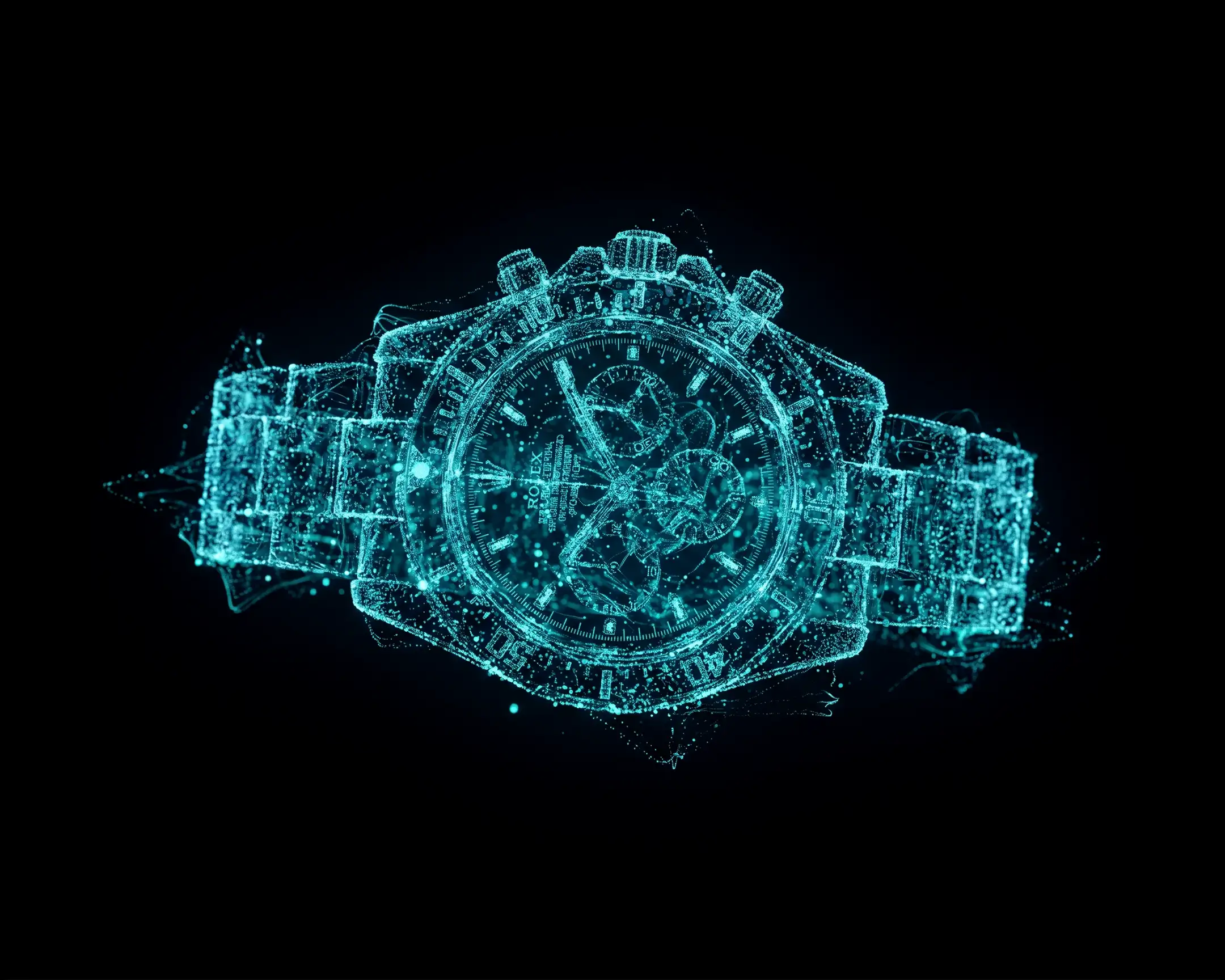
By the end of 2023, my freelance workload had pretty much dried up. To find some part-time work to tide me over, I started tidying up a portfolio that had sat dormant for a long time.
It should have been an utterly mechanical task — just dragging the projects I'd taken on over the years into the same layout, picking images, arranging them, and dashing off a line or two of design notes. But halfway through, at some point I suddenly stepped away from the mouse, looked at the whole spread of work, and thought: "The pieces on this page look like they were made by the same author."
Those bold color choices, the unconventional layouts, the overwhelming machinery, the tech and abstract-particle elements, and the genes of anime and games buried deep underneath… they gave off a high degree of consistency.
But here's the problem: I don't remember ever, at any moment, deciding to let them turn out this way.
That moment was a bit like running into a stranger — someone named Homer who, using my hands, while I wasn't paying attention, had stamped these projects with the same style. I could recognize it as "my style," yet I couldn't say when or from where it had been installed into my body.
This piece is an extension of the last one. If vol.11 took apart the dependent origination of the "work" — arguing how hando and MemeDam 2.0 were pieced together out of a pile of external conditions — then this one tries to take apart an even more stubborn affliction: even "the way I make things" itself was never purely mine.
1. Elements Borrowed from the World
When I first entered the workforce, I had no style. Back then my understanding of style was extremely vague, roughly stuck at "it should look good" and "these elements added together look like some classic style." It only began to grow flesh and bone during my collaboration with Garmin — watches need a large number of watch faces in different tones, and the demand forced me to try every kind of style: dot-matrix, retro-futurism, geometric, Pop art, East-West fusion… one after another. During that time I wasn't "expressing myself"; I was just exploring and playing around in the red ocean of history.
During that period, I got the chance to do some visual research. Riding that momentum, I seriously combed through the historical threads of aesthetic styles, and even wrote, at great length, a series of blog posts exploring visual styles — from Art Nouveau, pixel, and Pop art to Vaporwave. At the time I mistook it for scholarship; looking back now, it was nothing more than a cold start for my own aesthetic database.
As for the art of anime and games, that goes without saying. It's the matrix I'd been immersed in my whole life — absorbing it without even realizing I was.
So that "my style" I recognized in the portfolio at the end of 2023 — taken apart, not a single piece of it was something I produced out of nothing. It was all Garmin's demands, that bout of research, those blog posts, those game cutscenes, piled in bit by bit. I'm just the person who happened to be passed through by these things, and not some others.
2. They Say It Looks Like "Me," but I Can't Find the "Me"
These days, I can skillfully grab the specific elements of a given style, knead them into my own design, and output them together with a bit of personal preference smuggled in. When a client throws me a reference example, I can more or less reflexively tell how to "translate" it into the version I'm good at.
This sounds as if a stable central processor belonging to a "self" were running inside me.
And yet, whenever I try to point a finger at that core "me," what my fingertip touches is always someone else's brand. My nerve with color? Cultivated after looking at piles of bold work. My preference for asymmetric layouts? It comes from certain design masters I once admired to the point of utter prostration. Even my "kneading" technique, that sense of proportion I take to be intensely personal — put plainly, it's imitation too; it's just that the things I imitated were too varied and spanned too long a time, mixed together until even I forgot the sources.
Looking a lot like "me" is a genuinely existing kind of recognizability. But the entity "Homer" — search as I might, I can't find it. Everything I can point to is an assembled part; and what I can't point to is just the core that was wishfully assumed to sit behind the assembly, but was, in fact, never present.
3. So Where Exactly Is That Boundary Drawn?
If that's really the case, where exactly should the line of "my style" be drawn?
Is it "the logic of how things are combined"? But how to combine them was likewise learned. Is it "the sense of proportion"? The sense of proportion all comes from past visual experience too. Every artifact I want to hold up as a declaration of "this is uniquely mine" — dig down just one layer and the foundation is entirely colonized by things from outside. This boundary has never been fixed; just when you think you've defined it clearly, it throws up another exception.
Puzzled, I asked Claude. He handed me a term with a Buddhist tint — continuum. It means there is no permanent, unchanging entity, only a string of successive moments, each constantly rewritten by a new state. He also gently used a river as a metaphor: you are not a frozen statue but a ceaselessly rushing river.
The river metaphor isn't wrong, but it's too light, too romantic — not the texture I'm used to day to day. I'd rather describe it with the tool I hammer on every day: style has never been an official version Released to the public; it's a continuously extending Commit History.
Each commit stacks on top of the previous one. You can checkout back to any point in time and see what I looked like then — but you won't find the clean origin point before the "first commit." Because this repo was, from the very beginning, forked from someone else.
The 2024 me and the 2020 me might be no more alike in style than I am to some designer who once deeply inspired me.
4. Being Assembled Doesn't Mean Not Existing
Said this far, it's easy to sink into the quagmire of nihilism: by this logic, don't I have no style at all?
Not so. Here, the "Middle Way" mentioned in vol.11 appears again. What dependent origination dismantles isn't the existence of style itself, but style's "pure self-nature" — the arrogance and illusion of "this is entirely my own original creation, unrelated to the world." Once the illusion is stripped away, the remaining creation still operates objectively: I really can stably produce work with a high degree of recognizability, and that is utterly real.
Therefore, style isn't an asset I "own"; it's an event I'm "carrying out." It has no substance that can be captured, but it is happening at every moment.
So the question becomes very concrete and practical: since style is only an event and not property, then when I'm actually taking on projects and facing clients, what exactly am I fighting to the death to protect?
5. I Don't Guard Style; I Guard Principles
In vol.11 I admitted that I have a strong sense of ownership over concrete "works." When a client asks to change a color scheme I don't like, or a PM tries to cut a composition I think is a stroke of genius, deep down a resistance still instinctively rises up: "I made this, I'm the professional, why are you touching it?"
But strangely, toward "style" I have almost none of this reaction.
When a client says they want to switch to a completely different tone this season and asks me to rein in those bold colors, I mostly just reply calmly: "I wouldn't recommend it, but if you insist, that's fine too." My soul doesn't feel trampled by it.
Reflecting carefully on the difference: because a work is something I "made" — I issued one concrete instruction and decision after another for it, and it's like flesh extended from me — whereas style, I never "actively decided." It grew of its own accord, brazenly, and I have no idea when it even parasitized its way in. To fight desperately for a mirage I didn't build with my own hands — I simply can't muster the energy.
What I'll truly give no ground on, what I'll defend to the line, is something else.
For example, when the CI guidelines state in black and white that things must be flat, yet the client unreasonably insists on adding a hover shadow; or when the alignment logic of some layout gets forcibly changed by an amateur until it structurally collapses. At those times I'll firmly block it — but what I'm protecting isn't "my aesthetic sense has been violated," it's "there's a structural right and wrong here."
This sounds a bit ironic: toward the most "intangible" things (like style, so-called self-expression) I'm often the least defensive; yet toward the most "concrete" things, the ones least related to "me" (like rules and structural logic), I'll stand fully on guard.
But this isn't logically contradictory. The strength of the ownership instinct never lies in whether the object is beautiful or "looks like me," but in "whether I subjectively assume a pure self exists here that can be offended." For works, I once mistakenly thought there was (even though vol.11 already took it apart — there actually isn't); whereas for style, I've long known full well that it's an expanse of emptiness — it's full of my fragments everywhere, yet it's nowhere me. Touching any piece of it won't injure a core that never existed in the first place. Precisely because I own nothing, I can let go the most.
Closing
The phrase "finding your own style" is, in essence, a huge misunderstanding.
That dim, yellow-lit afternoon at the end of 2023, I didn't "find" my style. I merely, in a stack of drafts I was forced to use to make a living, happened to recognize an event that had been auto-generating all along, yet that I had never signed my name to. Even the act of "recognizing" it had nothing noble or enlightened about it — it was just a byproduct of being slammed head-on by reality while tidying up a portfolio I had no choice but to assemble for survival, my workload having plummeted.
As I wrote in vol.09, every career change is like putting on a stat sheet someone else designed long ago. Style works the same way — except this stat sheet is visual and intuitive, the kind you've already been wearing for most of your life without being the least bit aware of it.
Realizing this, half of me feels unbound: I probably won't be trapped to death by any particular style my whole life. Because it was never a welded-on part to begin with — as the next project, the next passing encounter comes in, it will involuntarily absorb new traces and evolve into a me that feels foreign even to myself, yet is brand new.
And yet the other half inevitably feels a little hollow. The taste I once took pride in and clung to as my own — taken apart in the end, it's nothing but a historical accident in which I happened, luckily, to absorb "these" things rather than "those." Underneath that style others recognize, there is actually no one at all.
At this point, what I can do, it seems, is no longer to guard to the death this dry well called style. It's to keep opening myself up, to be a competent channel, letting the world's traces pass through the hall — while soberly knowing that this channel itself is also pieced together from the fragments of countless others.